
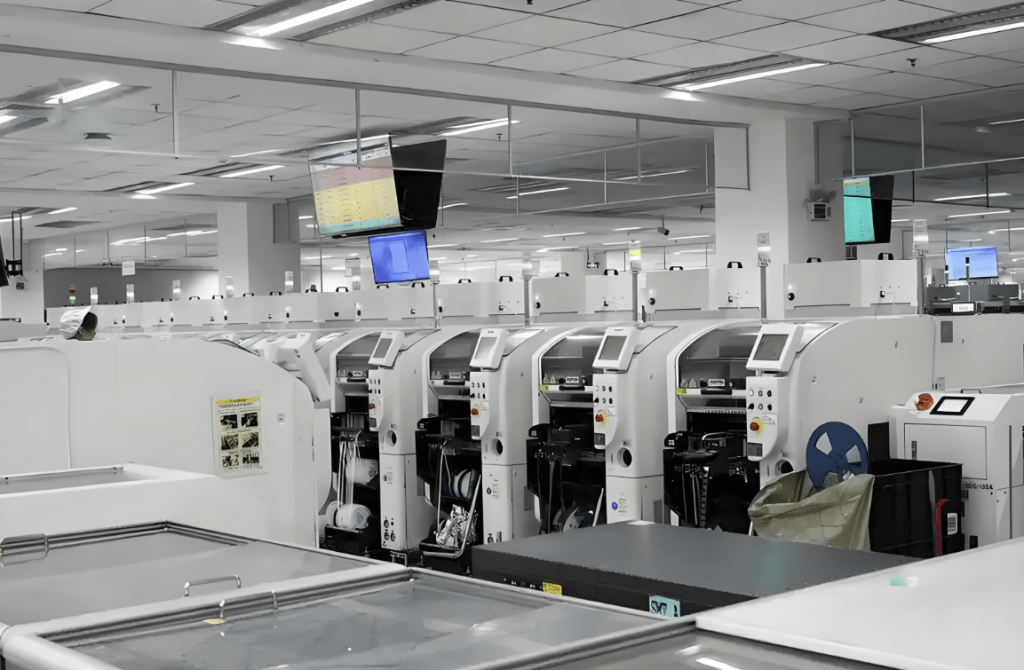


SMD (Surface Mount Device) packaging is highly sensitive to humidity, temperature, electrostatic discharge, and contamination. Ignoring environmental requirements can lead to moisture absorption, component oxidation, misfeeds, or soldering defects, reducing SMT assembly quality and reliability.
This guide outlines the key environmental factors, recommended conditions, and best practices for SMD packaging.
🔹 1. Temperature Control
Importance:
- Extreme temperatures can deform carrier tapes or damage sensitive components.
- High temperatures may soften plastic tapes, causing pocket misalignment.
- Low temperatures can make tapes brittle, leading to tearing or cracking.
Recommended Range:
- 18°C – 25°C (64°F – 77°F) for standard SMD packaging
- Avoid direct sunlight or hot machinery nearby
Best Practices:
- Install HVAC with temperature monitoring
- Use temperature alarms for automated lines
- Ensure consistent room temperature to avoid material expansion/contraction
🔹 2. Humidity Control
Importance:
- SMD components, especially moisture-sensitive ICs and LEDs, can absorb moisture, causing popcorning during reflow soldering.
- Excess humidity can weaken tape adhesive, causing loose cover tape or misfeeds.
Recommended Range:
- 40% – 60% Relative Humidity (RH) for general components
- <30% RH for moisture-sensitive devices (MSD) during handling
Best Practices:
- Use dehumidifiers or dry cabinets for storage
- Employ moisture barrier bags (MBB) with desiccant for reels
- Track humidity with data loggers in storage and production areas
🔹 3. Electrostatic Discharge (ESD) Control
Importance:
- Electrostatic discharge can destroy sensitive ICs instantly or degrade their reliability.
- Plastic tapes and reels are prone to static accumulation.
Best Practices:
- Use ESD-safe mats, wrist straps, and ionizers in taping and packaging areas
- Employ conductive or dissipative carrier tape for ESD-sensitive components
- Regularly test and monitor ESD grounding systems
🔹 4. Cleanliness and Dust Control
Importance:
- Dust or foreign particles can prevent proper seating of components in pockets
- Contaminants may cause soldering defects or misfeeds
Best Practices:
- Maintain cleanroom or controlled environment standards
- Implement air filtration (HEPA) for production lines
- Regularly clean machines, conveyors, and workstations
- Avoid unnecessary material handling in sensitive areas
🔹 5. Lighting and Visibility
Importance:
- Proper inspection of components and tapes requires adequate lighting
- Vision systems and human operators both rely on consistent illumination
Best Practices:
- Use LED lighting with >500 lux on inspection stations
- Minimize shadows and glare
- Ensure color rendering index (CRI) >80 for accurate visual inspection
🔹 6. Storage and Handling Guidelines
- Store reels in original packaging until use
- Keep dry and ESD-safe storage cabinets
- Rotate inventory using FIFO (First-In, First-Out) to avoid extended exposure
- Label and track storage environment conditions
🔹 7. Summary / Key Takeaways
| Environmental Factor | Recommended Control | Reason |
|---|
| Temperature | 18–25°C | Protect tape & components |
| Humidity | 40–60% RH; <30% RH for MSD | Prevent moisture damage & adhesive weakening |
| ESD | Grounding, ionizers, dissipative tape | Prevent IC failure |
| Cleanliness | HEPA filters, cleanroom, regular cleaning | Avoid misfeeds & solder defects |
| Lighting | >500 lux, CRI>80 | Ensure accurate inspection |
🌐 Conclusion
Maintaining optimal environmental conditions in SMD packaging is critical for quality, reliability, and defect reduction. Proper control of temperature, humidity, ESD, cleanliness, and lighting ensures smooth taping, secure component placement, and reliable SMT assembly outcomes.
At SMT Pack Lab, we combine environmentally controlled packaging solutions, anti-static tapes, and automated inspection to deliver high-quality, defect-free SMD reels ready for high-speed SMT lines.


 SMTPack LAB
留下评论