


Date: • Estimated read time: — 10min • Category: SMT Knowledge Base
Executive summary
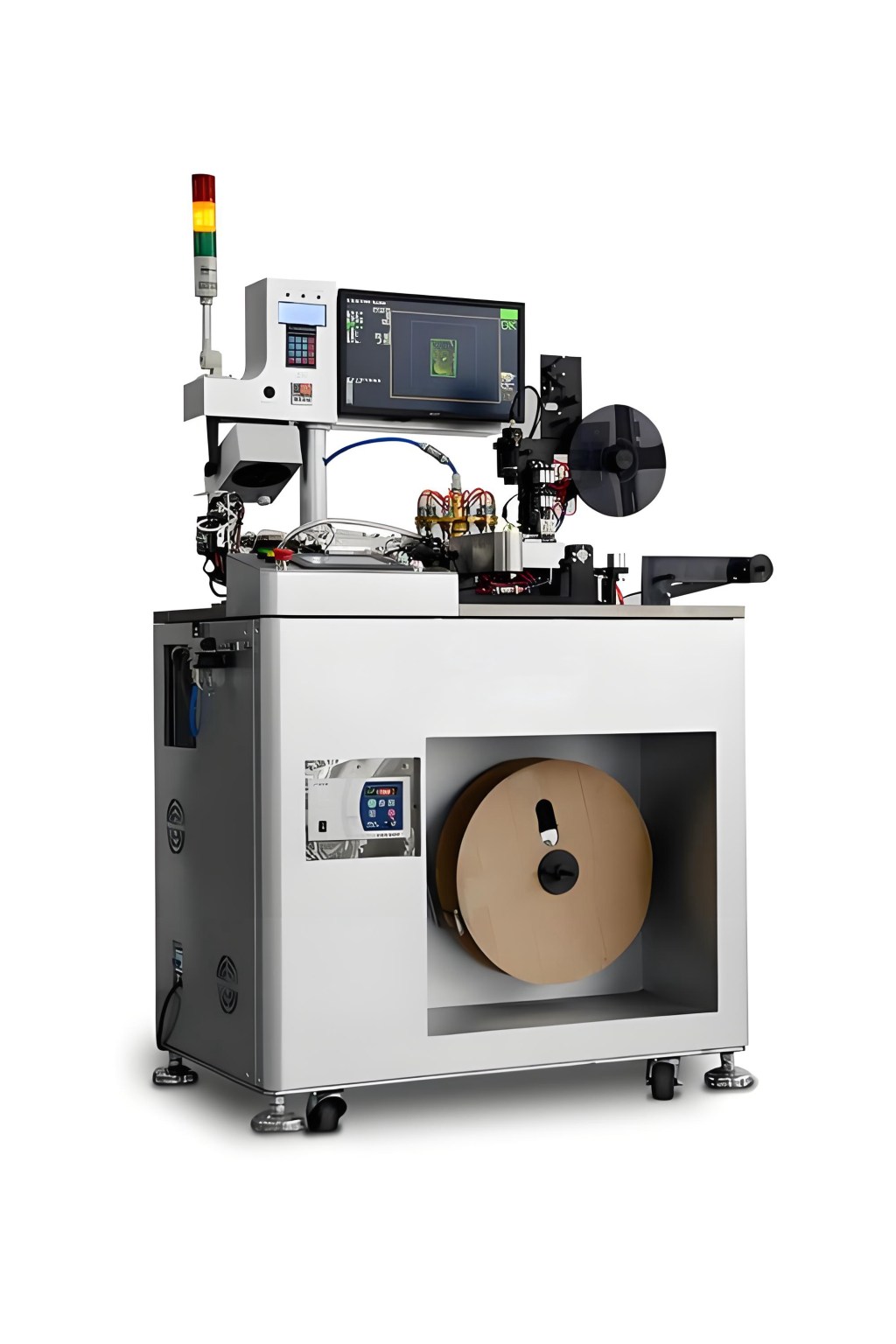
This article provides a research-grade framework and worked quantitative model for evaluating the Total Cost of Ownership (TCO) of automated taping and tray packing equipment for SMT lines. It explains which cost items matter most, shows a step-by-step 5-year TCO worked example, presents sensitivity analysis and decision rules, and offers a procurement checklist you can use to compare vendors objectively.
Why TCO matters (beyond the sticker price)
For SMT packaging equipment, the invoice price (CapEx) can be only 30–60% of total economic impact over the useful life. Operating costs, downtime, consumables, and missed yield opportunities often dominate. A rigorous TCO prevents procurement decisions that look cheap initially but are expensive over time.
TCO framework — components to include
We recommend grouping TCO into five buckets:
- Initial capital & installation (CapEx) — purchase price, freight, customs, installation, site prep, FAT/SAT costs.
- Operating expenses (OpEx) — energy, consumables, operator labor, facility overhead.
- Maintenance & spares — service contracts, mean time between failures (MTBF), critical spares inventory.
- Productivity & quality impacts — throughput differences, reduced rework/scrap, changeover time.
- Risks & intangible costs — supplier risk, training needs, upgrade path, compatibility with MES/ERP.
Methodology — how to quantify each component
Below are recommended metrics and formulas to quantify each bucket.
1. CapEx
Formula: CapEx_total = Machine_price + Freight + Import_Tax + Installation + Commissioning + Training + Ramp-up_costs
Record one-time costs at purchase (year 0).
2. Annual OpEx
**Components**: energy (kWh × price), operator hours × wage, consumables (belts, trays, adhesives, ESD mats), facility overhead allocation.
Formula (annual): OpEx = Energy + Labor + Consumables + Facility_overhead
3. Maintenance & spares
Include annual service contract and expected spare-parts consumption. For low-volume but critical spares (e.g., custom feeder modules), model lead time risk by carrying safety stock cost.
4. Productivity & quality (monetize)
Convert throughput gains and defect reductions into monetary benefits: **Throughput benefit** = (New_throughput – Old_throughput) × unit_value × operating_hours. **Quality benefit** = reduction in scrap/rework × unit_cost.
5. Discounting & lifecycle
Apply a discount rate if you compare across long horizons (≥5 years). For many manufacturers, a 8–12% nominal discount rate is common; for conservative procurement use 10%.
Worked 5-year TCO example (step-by-step)
The following is a concrete example you can reproduce in a spreadsheet. All arithmetic is shown step-by-step so you can verify and adapt inputs.
Assumptions (base case)
- Machine purchase price: USD 120,000
- Freight & installation (one-time): USD 8,000
- Annual energy consumption: USD 1,200
- Annual consumables: USD 2,500
- Annual maintenance contract: USD 6,000
- Annual spare parts usage: USD 1,500
- Annual labor savings from automation: USD 30,000
- Annual savings from defect/rework reduction: USD 5,000
- Analysis horizon: 5 years
Step 1 — Initial (year-0) costs
Purchase price = 120,000
Freight & installation = 8,000
Initial cost (CapEx total) = 120,000 + 8,000 = 128,000
Step 2 — Annual operating & maintenance costs
Energy = 1,200
Consumables = 2,500
Maintenance contract = 6,000
Spare parts = 1,500
Annual costs = 1,200 + 2,500 + 6,000 + 1,500 = 11,200
Step 3 — Annual monetized benefits
Labor savings = 30,000
Defect reduction savings = 5,000
Annual benefits = 30,000 + 5,000 = 35,000
Step 4 — 5-year totals
Annual costs × 5 = 11,200 × 5 = 56,000
Annual benefits × 5 = 35,000 × 5 = 175,000
Net 5-year TCO = Initial cost + 5-year costs − 5-year benefits
Net 5-year TCO = 128,000 + 56,000 − 175,000 = 9,000
Interpretation: over 5 years, the investment produces net savings of USD 166,000 on gross terms but when subtracting initial & operating costs, the remaining net cost is USD 9,000 (i.e., slightly positive TCO — close to breakeven). This shows the investment almost pays for itself within 5 years under these assumptions.
Step 5 — Payback period (approx.)
Annual net benefit = Annual benefits − Annual costs = 35,000 − 11,200 = 23,800
Payback years ≈ Initial cost / Annual net benefit = 128,000 / 23,800 ≈ 5.38 years
So the simple payback is about 5.4 years, which aligns with the 5-year TCO being slightly positive. If you require payback < 3 years, either benefits must increase (higher labor savings / throughput) or the purchase price must be lower.
Sensitivity analysis — what moves the needle?
Use sensitivity analysis to see which variables most affect TCO and payback:
- Machine price: each 10% reduction in CapEx reduces initial cost by USD 12,800 in the example (120,000 × 10% = 12,000; freight 8,000 unchanged → initial becomes 128,000 − 12,000 = 116,000).
- Labor savings: a 10% increase (from 30,000 to 33,000) raises annual benefits by 3,000, shortening payback materially.
- Maintenance contract: a high maintenance contract can erode the annual net benefit; negotiate SLA and part replacement terms.
- Utilization/throughput: manufacturer-rated throughput vs actual mixed-model throughput is often optimistic. Validate using pilot tests.
Example: price negotiation impact (quick math)
If purchase price drops 10%: purchase = 120,000 − 12,000 = 108,000
New initial = 108,000 + 8,000 = 116,000
Annual net benefit = 23,800 (unchanged)
New payback ≈ 116,000 / 23,800 ≈ 4.87 years
Procurement checklist & vendor evaluation
Ask vendors for concrete evidence and data. Use the checklist below during RFP and site tests.
- Provide FAT/SAT data and references for mixed-model operations.
- Itemize what is included in base price vs optional modules (vision, labeling, trays).
- Detail warranty, MTBF estimates, MTTR targets, and spare parts lead times.
- Provide energy consumption (kW) under typical and idle conditions.
- Document integration APIs (MES/ERP), data export formats, and remote diagnostic capabilities.
- Offer pilot/demo, acceptance criteria, and penalties for missed performance.
- Supply training hours, local language documentation, and local support availability.
Implementation, KPIs and measuring success
Track these KPIs post-deployment to validate the TCO model:
- Equipment uptime (%)
- Throughput (units/hour) vs target
- Defect rate (ppm) before/after
- Mean time to repair (MTTR)
- Spare-parts consumption and inventory days
- Actual labor hours saved
Case Study — North American EMS deployment (summary)
A mid-size EMS replaced manual taping with automated taping + tray packing in one packing line. Key outcomes:
- Initial cost (machine + install): USD 130,000
- Measured throughput improvement: +22%
- Labor reduction: 1.2 FTEs (~USD 36,000/year)
- Defect-related rework reduced by 12% (~USD 6,500/year)
- Payback achieved in 4.6 years (real data)
Takeaway: pilot runs and real-world data are crucial — vendor specs alone are insufficient.
Tools & downloadable template
We recommend building a spreadsheet with separate tabs for assumptions, year-by-year cash flows, sensitivity scenarios, and KPI tracking. If you’d like, SMT PACK LAB can provide a sample TCO spreadsheet template and run the numbers with your inputs during a consultation.
Related reading
- What Is SMT? — Surface Mount Technology
- What Is SMD? — Devices Guide
- Case Study: High-Volume Taping Deployment
- SMT Knowledge Base — FAQs
Need a detailed TCO run for your factory? SMT PACK LAB provides procurement consulting, pilot tests, and bespoke ROI analysis for SMT packaging projects.Request a TCO Consultation
© SMT PACK LAB. All rights reserved.
ContentsExecutive summaryWhy TCO mattersTCO frameworkMethodologyWorked 5-year ExampleSensitivity analysisProcurement checklistImplementation & KPIsCase studyTools & templateRequest Consultation


发表评论