
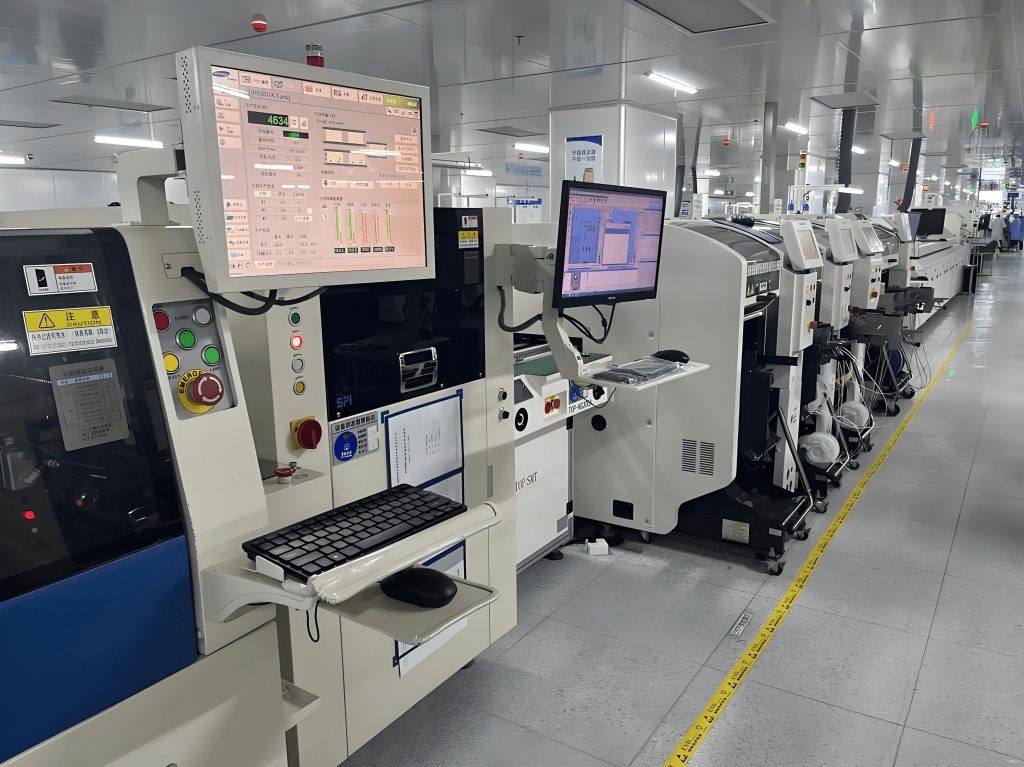


In today’s era of highly automated and intelligent industry, quality, efficiency, and consistency have become the cornerstones of sustainable competitive advantage. Among the critical technologies that ensure these pillars, machine vision systems stand out. Acting as an “intelligent eye” for machines, they surpass the physiological limits of human vision, performing tireless and fully objective inspection, measurement, recognition, and guidance in high-speed, high-precision, and high-load industrial scenarios. This article presents an in-depth exploration of machine vision systems, examining their technical principles, system architecture, core algorithms, application scenarios, challenges, and future trends.
Chapter 1: Overview of Machine Vision Systems — From “Seeing” to “Cognition”
At its core, a machine vision system is a complex integration of optics, mechanics, electronics, software, and algorithms. Its primary function is not merely to “see” objects but to process and analyze captured image information, extract key features, and make intelligent decisions based on these features. This process simulates human visual cognition while achieving leaps in speed, accuracy, and reliability.
Compared to traditional manual inspection, machine vision offers unparalleled advantages:
- High Accuracy and Resolution: Modern industrial cameras equipped with high-resolution lenses can detect micron-level defects, such as minor scratches on chip circuits or subtle deformations on component pins—well beyond the resolving power of the human eye under a microscope.
- High Speed and Efficiency: Image processing typically completes within tens to hundreds of milliseconds, enabling 100% online inspection on production lines processing thousands of units per minute.
- Tireless and Objective: Human inspectors are prone to fatigue, subjective bias, and variability in judgment. Vision systems strictly follow preset algorithms and standards, producing consistent and unbiased results.
- Non-Contact Measurement: Inspection occurs without physical contact, preventing secondary damage, particularly important for delicate, soft, or high-temperature objects.
- Environmental Adaptability: With specialized lighting and protective designs, these systems operate reliably in environments unsuitable for humans, including strong light, darkness, high temperature, high humidity, dust, or toxic conditions.
- Data Traceability: Each inspection outcome—including images, feature data, decision results, and timestamps—can be recorded and stored, forming a complete quality traceability chain and providing valuable data for process optimization.
From simple character recognition to complex 3D surface measurements, and from macro-level assembly verification to micro-level semiconductor defect detection, machine vision is expanding its boundaries across intelligent manufacturing, high-end equipment, renewable energy, pharmaceuticals, food, and beyond.
Chapter 2: System Architecture — Precision Coordination of Hardware and Software
A complete machine vision system consists of hardware and software subsystems—its “body” and “brain,” both indispensable.
1. Hardware Subsystem: The Foundation of Image Acquisition
The hardware converts optical information from the physical world into digital images for computer processing. Key components include:
- Industrial Cameras: The “retina” of the system.
- Sensor Types: CCD and CMOS. CCDs traditionally excelled in image quality and consistency, but CMOS cameras now dominate due to low cost, high integration, high frame rates, and low power consumption. Global shutter CMOS cameras prevent motion distortion, crucial for industrial applications.
- Resolution: Determines detail capture capability. Optimal selection balances field-of-view (FOV) and inspection precision. Excessive resolution increases data processing load and cost.
- Frame Rate: Determines inspection speed and must match production line throughput.
- Interfaces: GigE, USB3.0, CoaXPress, Camera Link. GigE is cost-effective and long-range; USB3.0 offers plug-and-play convenience; CoaXPress and Camera Link suit high-speed, high-stability requirements.
- Industrial Lenses: The system’s “crystalline lens.” Lens quality directly affects image clarity and measurement accuracy.
- Focal Length: Influences FOV and working distance. Wide-angle lenses provide larger FOV but may induce edge distortion; telephoto lenses offer longer working distance with a narrower FOV.
- Depth of Field: Ensures all features remain sharp despite surface variations.
- Distortion: Includes barrel and pincushion distortions; low-distortion lenses or software correction is required for precision measurement.
- Specialized Lenses: Telecentric lenses eliminate perspective error, macro lenses capture tiny objects, and line-scan lenses work with linear sensors for continuous surfaces.
- Illumination Systems: Often the most critical yet overlooked component. Proper lighting highlights features and minimizes background interference.
- Lighting Techniques: Front lighting (ring, bar, dome, coaxial), backlighting for silhouette detection, and structured light for 3D surface profiling.
- Angles and Wavelengths: High-angle light emphasizes flat surfaces; low-angle light (dark field) reveals scratches or depressions. Specific wavelengths (infrared, blue) enhance feature contrast for targeted inspection.
- Image Acquisition Cards: Convert camera outputs into digital images for processing. With digital interface cameras, their necessity has diminished.
- Control System & Trigger Sensors: Act as the command center, often a PLC or industrial PC, coordinating sensors and cameras to synchronize image capture and mechanical actions.
- Industrial PC: The “brain,” executing image processing algorithms, making decisions, and controlling actuators.
2. Software and Algorithm Subsystem: The Core of Intelligent Decision-Making
Software transforms raw pixel data into actionable insights through a standardized processing pipeline:
- Image Acquisition and Buffering: Captures and temporarily stores image data.
- Preprocessing: Reduces noise, corrects lighting variations, and enhances contrast. Techniques include filtering (mean, median, Gaussian), histogram equalization, and flat-field correction.
- Region of Interest (ROI) Localization: Focuses computation on critical areas.
- Feature Extraction: Quantifies key information for decision-making. Methods include edge detection (Sobel, Canny), blob analysis, template matching, morphological operations, color analysis, and texture analysis.
- Decision and Classification: Compares extracted features to thresholds or rules. Simple logic suffices for basic tasks, while machine learning (SVM, decision trees, k-NN) or deep learning (CNNs) handles complex, high-variability defects.
- Result Communication and Execution: Sends outcomes to PLCs, robots, or management systems, triggering actions such as rejection, logging, or alarms.
Chapter 3: Core Application Scenarios — From Macro to Micro
Machine vision permeates every industrial corner. Key applications include:
- Electronics and Semiconductor Manufacturing:
- Wafer inspection, PCB printing and assembly inspection, solder paste inspection, component placement verification, and display panel defect detection.
- Automotive Industry:
- Component dimensional and defect inspection, assembly verification, VIN/barcode reading, and body weld inspection.
- Pharmaceutical and Medical:
- Packaging verification, medical device inspection, liquid filling inspection, ensuring compliance with GMP regulations.
- Food and Beverage:
- Quality sorting, foreign object detection, packaging verification, safeguarding safety and compliance.
Chapter 4: Challenges and Technical Bottlenecks
- Environmental interference: lighting fluctuations, vibration, electromagnetic interference, dust, and oil.
- Scarcity and diversity of defect samples for AI training.
- Balancing speed and precision on high-throughput lines.
- Usability and maintainability for non-specialists.
- 3D vision adoption: richer information but higher cost and computational complexity.
Chapter 5: Future Trends and Outlook
- AI and Deep Learning Integration: From preprocessing to decision-making, including self-optimizing systems.
- 3D Vision as Standard: Enabling precise measurement, robot guidance, and complex defect detection.
- Hyperspectral and Multispectral Imaging: Detecting chemical composition and material differentiation.
- Embedded Vision and Edge Computing: Reducing latency, increasing independence, and enabling distributed intelligent manufacturing.
- Cloud Vision and Big Data: Connecting factories for predictive maintenance and global process optimization.
- Human-Machine Collaboration: Combining automated screening with human judgment for continuous improvement.
Conclusion
Machine vision systems, combining multiple disciplines, have evolved from a lab curiosity into a cornerstone of modern high-quality industrial production. They serve not merely as substitutes for human eyes but as enablers of intelligent manufacturing and digital quality systems. From chips to cars, lifesaving medicine to daily food, the “intelligent eye” quietly safeguards quality and safety. With ongoing advances in AI, sensing, and computing, machine vision will progress from detecting issues to predicting and explaining them, forming a foundation for truly unmanned smart factories. The industrial revolution led by the “eye of machines” is just beginning—and its future is exceptionally promising.


 SMTPack LAB
留下评论