
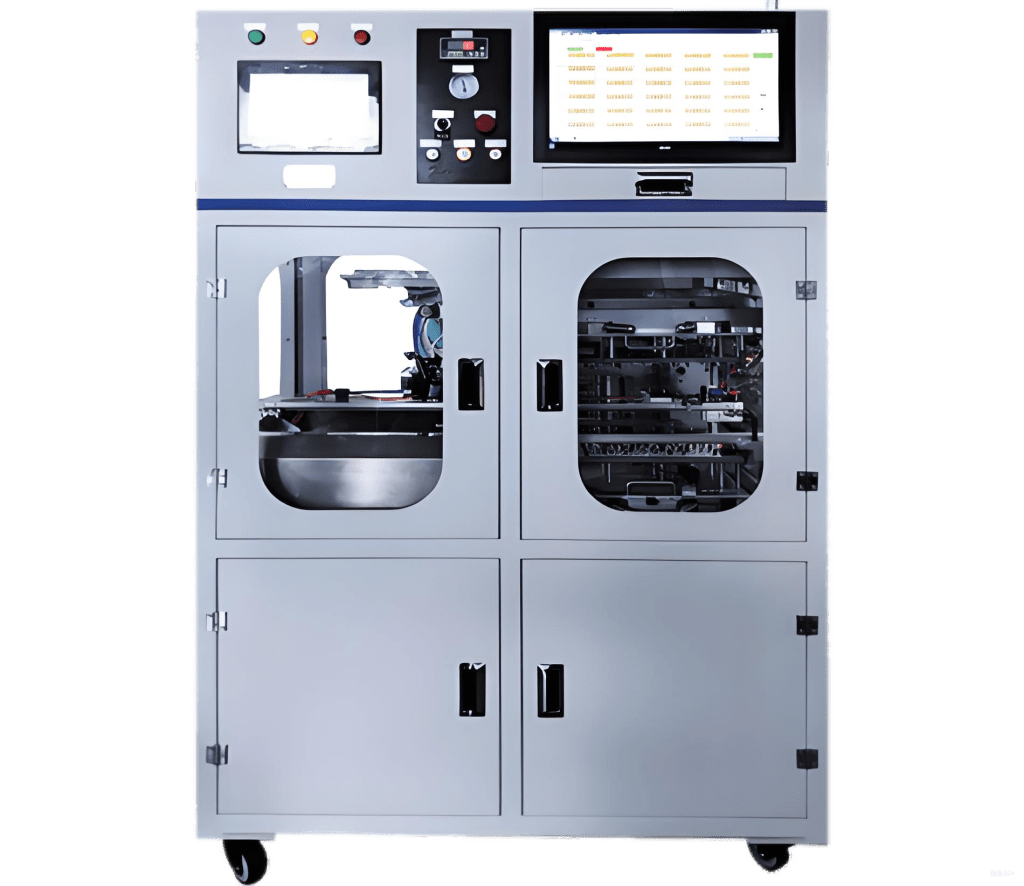


From “Firefighting” to “Fire Prevention”: Advanced Strategies for Proactive and Predictive IC Programmer Maintenance
In the realm of highly automated electronics manufacturing, IC programmers are the undisputed monarchs — injecting invisible code into the silicon soul, giving hardware its lifeblood. Yet these precision instruments are often relegated to mere “tools,” with maintenance strategies stuck at the primitive “fix it when it breaks” stage. This reactive model is akin to driving along a cliff without guardrails: a single unexpected failure can halt an entire production line, incurring losses of tens of thousands per hour, while hidden degradations in Firmware Integrity or Signal Integrity risk long-term brand reputation and client trust.
Therefore, maintaining IC programmers effectively transcends conventional “upkeep.” It represents a profound paradigm shift: from viewing maintenance as a cost center to a strategic investment, from intuition-driven practices to Data Traceability and predictive analytics, from isolated tasks to a fully integrated system-level operation. This article aims to establish a top-tier maintenance framework encompassing philosophy, technical practice, management processes, and forward-looking insights, elevating IC programmer reliability to its maximum potential.
Chapter 1: Paradigm Revolution — Redefining Maintenance Value and Hierarchy
1.1 Value Reconstruction: From “Necessary Cost” to “Core Competence”
It is imperative to overturn the outdated notion of maintenance as a “pure expense.” In modern manufacturing philosophy, an excellent maintenance system is the cornerstone of Production Flow Stability, Quality Assurance, and Supply Chain Predictability, forming the enterprise’s latent competitive advantage.
Consider the quantified cost of poor maintenance:
- Direct Downtime Costs: Programmer failures halt production lines. Formula:
(Production line hourly value - Variable Costs) x Downtime hours. For a mid-sized SMT line, daily losses can reach hundreds of thousands. - Quality and Brand Reputation Costs: Using unverified or improperly serviced IC programmers may introduce subtle deviations. For instance, increased power ripple can cause Weak Write Effects, leading to premature device failures at the client side. The resulting recalls, compensations, and reputational damage are incalculable.
- Opportunity Costs and Data Gaps: Production disruptions cause delayed deliveries and client claims. Predictive Maintenance and Process Control gaps compromise the traceability chain, reducing confidence in quality analytics.
Hence, the ROI for IC programmer maintenance should be measured in “Losses Avoided”. Every investment buys leverage in uptime, product quality, and brand credibility.
1.2 Strategic Evolution of Maintenance: Four Maturity Levels
- Reactive Maintenance — “Fix it when it breaks.”
- Characteristics: No plan, no prevention. Maintenance occurs only after total failure.
- Cost: Highest, including emergency parts, overtime, downtime, and quality risks.
- Keywords: Reliability Optimization, Error Prevention
- Preventive Maintenance (PM) — “Scheduled Checkups.”
- Characteristics: Regular cycles (weekly/monthly/quarterly) for cleaning, calibration, consumable replacement.
- Advantages: Establishes order, prevents time- or usage-related failures.
- Limitations: Risks over-maintenance or under-maintenance; experience-driven rather than Data-Driven.
- Keywords: Quality Assurance, Process Control
- Predictive Maintenance (PdM) — “Condition-Based Alerts.”
- Characteristics: Continuous monitoring of performance parameters, using trend analysis to anticipate failures.
- Core: Data-Driven, answering “When does the equipment actually need service?”
- Keywords: Predictive Maintenance, Manufacturing Analytics
- Prescriptive Maintenance — “AI-Driven Decisions.”
- Characteristics: AI/ML analyzes maintenance scenarios, recommends optimal actions, eventually enabling automated execution.
- Keywords: High-Performance SMT, Industry 4.0 Compliance
The strategic goal is to transition enterprises from stages one and two to predictive maintenance (PdM) as the core, paving the way for prescriptive maintenance.
Chapter 2: Four Strategic Pillars for an Unbreakable Maintenance System
Pillar One: Precision Preventive Maintenance — Establishing Quantifiable “Health Baselines”
- Digital Twin for Equipment: Maintain comprehensive records of all critical components, including Power Management, performance history, and baseline measurements.
- Risk-Based Standard Maintenance Procedures (SMPs): Tiered tasks (daily/weekly, monthly/quarterly, annual) executed by operators, certified technicians, and senior engineers. Tasks include ESD Protection, voltage/current monitoring, thermal checks, and signal integrity testing.
- Keywords: Reliability Optimization, Signal Integrity, Thermal Management
Pillar Two: Data-Driven Predictive Maintenance — Listening to Early Device Signals
- Internal Data Mining: Monitor output voltage, current, temperature trends. Use SPC control charts to detect anomalies indicating degradation.
- Error Log Pattern Recognition: Detect trends in byte verify errors, device ID timeouts, etc.
- External Sensor Networks: Thermal imaging, online power quality, vibration monitoring.
- Keywords: Predictive Maintenance, Automated Testing, IC Programmer Efficiency
Pillar Three: Strategic Spare Parts & Consumable Management — Agile and Reliable Logistics
- ABC-XYZ Inventory Classification: Critical high-value parts (A) under VMI or rapid delivery agreements; mid-range (B) under safety stock; low-value (C) bulk procurement.
- Consumable Lifecycle & Passport System: Track insertion counts, contact resistance, calibration history. Preemptive replacement ensures uptime.
- Keywords: High-Speed Programming, Data Traceability
Pillar Four: Workforce Empowerment & Knowledge Management — Creating a “Never Offline” Expert System
- Tiered Training & Certification: L1 Operators, L2 Technicians, L3 Engineers. Focus on SOP compliance, diagnostics, RCA, and maintenance optimization.
- Dynamic Knowledge Base: Case reporting, AR-assisted operations, step-by-step guidance.
- Keywords: Firmware Integrity, Manufacturing Analytics, MES Integration
Chapter 3: System Integration & Performance Enhancement
- MES & CMMS Integration: Maintenance schedules triggered by production plans; real-time status updates feed back to MES for dynamic scheduling.
- KPIs & Dashboards: MTTR, MTBF, OEE, preventive maintenance compliance.
- AI-Powered Predictive Modeling: LSTM, random forest models detect potential failures with high accuracy.
- Decision Optimization: Recommendations consider inventory, production priorities, technician availability, and cost.
- Keywords: Industry 4.0 Compliance, High-Performance SMT, Robust Script Design
Conclusion: Maintenance as Investment, Stability as Competitive Edge
A comprehensive IC programmer maintenance system blends precision engineering, data science, management art, and human expertise. By combining precision preventive care, data-driven predictive insights, intelligent spare part management, and continuous workforce empowerment, enterprises can transcend reactive firefighting, achieving near-perfect uptime, consistent product quality, resilient supply chains, and lasting client trust — forming an inimitable global competitive advantage.


 SMTPack LAB
留下评论