
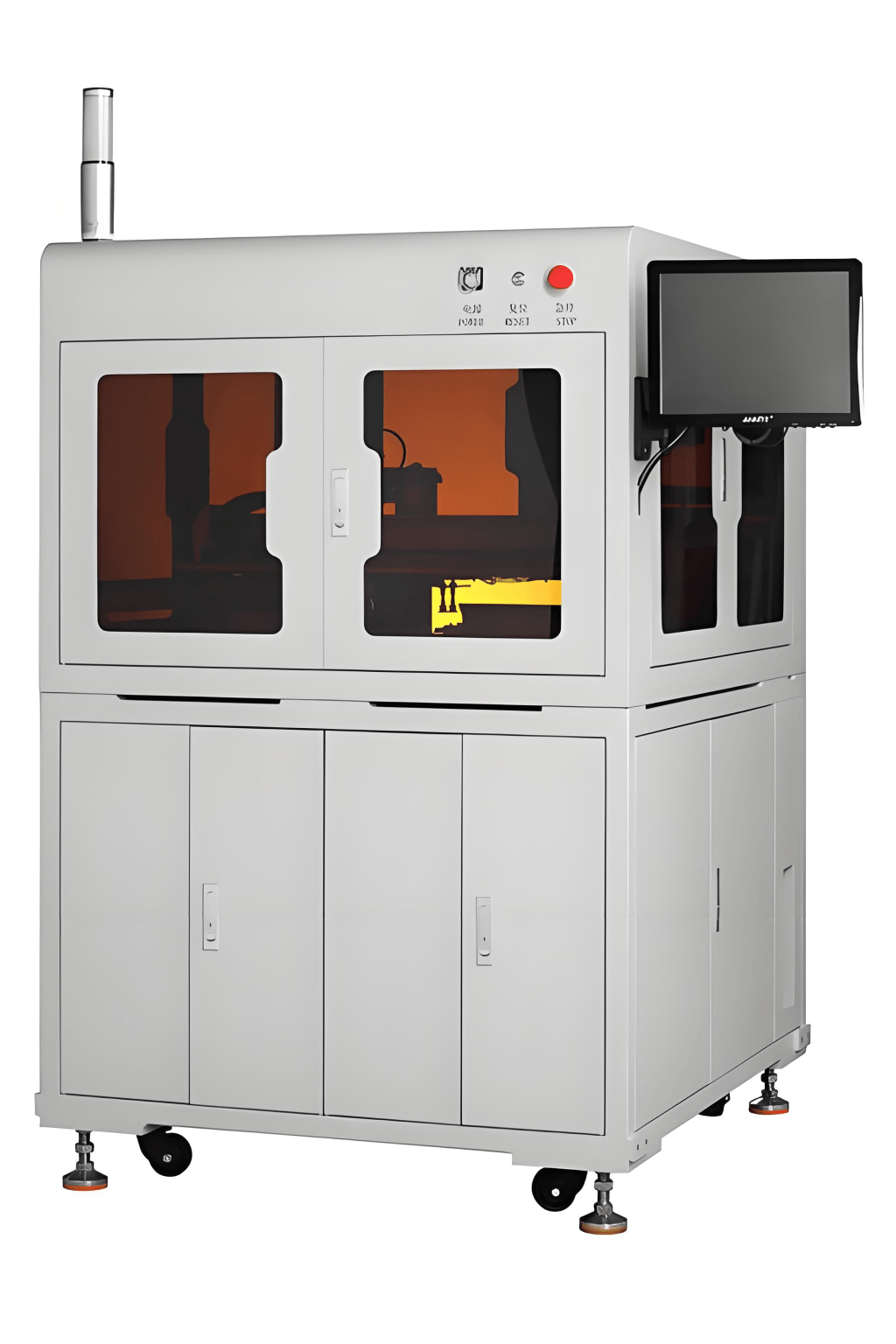


Why Master Tray Loader Operations Matters
Tray loaders are quietly heroic on modern SMT lines: they reduce manual handling, enable continuous feeding of fragile components, and—when tuned properly—dramatically increase throughput and yield. But poor setup turns them into production gremlins: jams, misalignments, and sporadic errors. In this guide we’ll go beyond the basics and cover advanced operation tips: precise calibration, dynamic speed tuning, MES integration, predictive maintenance, and real troubleshooting recipes that actually work on shop floors.
This is an operational playbook for engineers and senior operators who already know the basics (if you want a refresher, check our SMT Basics collection). Here we’ll focus on practical steps and repeatable checks so your tray loader behaves—reliably, quietly, and efficiently.
Table of Contents
- Why Master Tray Loader Operations Matters
- 1 — Precision Calibration & Fine Tuning
- 2 — Speed, Acceleration & Throughput Balancing
- 3 — MES Integration & Traceability
- 4 — Predictive & Preventive Maintenance
- 5 — Advanced Troubleshooting Recipes
- 6 — Operator Practices & SOPs
- Case Study & Benchmark
- Conclusion & Next Steps
- Related Articles
1 — Precision Calibration & Fine Tuning
Calibration is the foundation. A tray loader out of calibration will cause pick errors at the pick-and-place head even when feeders and head vision are perfect. Follow these advanced calibration steps:
Detailed calibration checklist
- Mechanical zeroing: Park the loader in mechanical home and verify the reference stops. Use a feeler gauge to confirm tray seat distances match spec.
- Optical sensor alignment: Using a reference tray, tune sensor threshold so pockets trigger cleanly under typical lighting. Avoid over-sensitive settings that cause false positives with dust.
- Encoder verification: Compare loader encoder counts per tray step against expected values. If counts vary, inspect belt tension and encoder mounting.
- Camera-to-loader registration: If the loader uses a vision check, run a registration routine so the inspection camera coordinates align with tray coordinates within ±0.1 mm where possible.
- Document baseline values: Save all calibrated positions and thresholds to the machine profile and to your MES recipe to enable fast loadouts.
Pro tip: keep a physical calibration card (PDF) next to the machine listing encoder counts, sensor thresholds and tension gauge readings — this reduces ‘trial-and-error’ during shift change.
Calibration pitfalls to avoid
- Avoid tuning sensors at a single ambient light level; test across lighting variations.
- Never ignore small encoder drift—compounded over thousands of cycles it becomes misplacement.
- Always re-run calibration after hardware changes: new belt, different tray type, or replaced sensor.
2 — Speed, Acceleration & Throughput Balancing
Raw speed is useless if it breaks repeatability. The challenge: maximizing throughput while keeping pick success high. The approach is measurement-driven tuning.
Speed tuning procedure
- Start with conservative speed and acceleration — the machine manual often lists safe baseline values.
- Run a production-equivalent test batch and log mis-pick events for 1,000 placements.
- Increment acceleration in small steps; acceleration has larger effect on mechanical stress and tray vibration than top speed.
- Tune jerk/jerk-limiting (if supported) to smooth starts/stops and reduce tray slip.
- Graph throughput vs error-rate; choose an operating point where incremental speed gains cost minimal error increase.
Use your MES or a simple CSV logger to record events: feed index, pick success, sensor triggers. This allows empirical decisions rather than “fingers crossed” tuning.
3 — MES Integration & Traceability
Integrating tray loader status and recipes into your MES unlocks operational consistency and traceability. Don’t treat the loader as a dumb peripheral; treat it as a first-class device.
Key MES integration items
- Push loader recipe (positions, speed, tension) to MES so setups are reproducible.
- Emit events: tray change, jam, sensor fault, cycle counts to MES logs for analytics.
- Use serial numbers / tray batch IDs to link component lots to production units for root-cause analysis.
- Automate alerts for deviation thresholds — e.g. tension drift > 10% triggers inspection.
If you need guidance on SOP-to-MES mapping, our Technical Articles hosts integration examples and recipes.
4 — Predictive & Preventive Maintenance
Preventive maintenance (PM) is table stakes; predictive maintenance (PdM) saves actual money. Combine routine PM with simple in-line metrics to predict failures.
Maintenance schedule (example)
- Daily: Wipe rails, inspect trays for deformation, check sensors for dust.
- Weekly: Verify belt tension, inspect encoder mountings, lubricate specified bearings.
- Monthly: Full alignment and encoder drift check, update MES calibration record.
- Quarterly: Replace belts or rollers where wear > threshold, revalidate registration.
Implement a simple PdM rule: if average motor current increases by X% over baseline for N cycles, schedule immediate inspection—this often catches binding or bearing wear early.
5 — Advanced Troubleshooting Recipes
When things go wrong, the faster you isolate root cause, the less downtime you suffer. Here are tried-and-tested recipes.
Recipe: Intermittent tray misalignment
- Check mechanical seating points for wear — replace if radius is out of spec.
- Inspect encoder tightness and test for slippage at high acceleration.
- Monitor ambient vibration—nearby equipment can couple vibrations into the loader.
- Validate sensor timing; add a 1–2ms debounce if false triggers are recorded.
Recipe: Frequent tray jams
- Open rails and inspect for debris or burrs. Clean and polish seating surfaces.
- Verify tray flatness tolerances; inferior trays cause edge catching.
- Reduce acceleration temporarily and re-test; if jams decrease, improve mechanical damping.
6 — Operator Practices & SOPs
A well-trained operator is your first line of defense. Standardize and simplify.
- Create a one-page startup/shutdown checklist with critical calibration numbers.
- Use labeled presets in the HMI for different tray types—no manual fiddling during changeover.
- Record every jam and corrective action in a short log (time, reel ID, action taken).
- Conduct quick shift-change calibration checks—5 minutes can catch drift before production starts.
Want templates? See related SOP examples in our Technical Articles and SMT Basics.
Case Study & Benchmark
On a 10-station SMT line, applying the above program (rigid calibration, MES recipes, PdM motor-current alerts) reduced tray-related stoppages by 72% and increased overall line throughput by ~14% over three months. The secret: combine mechanical discipline with data-driven thresholds.
Conclusion & Next Steps
Mastering tray loader operations is not a single tweak—it’s a program: precise calibration, measured speed tuning, MES integration, preventive/predictive maintenance, and operator discipline. Implement the checklists above, log everything, and iterate weekly.
For more advanced guides and templates, explore:
If you want, I can now:
- Produce printable calibration cards (PDF) for this article
- Generate the MES event schema (JSON) for the loader
- Auto-generate an SOP checklist page linked to this article
Related Articles
- Preventive Maintenance Schedule for Tape and Reel Machines
- How to Set Up a Tape and Reel Machine Effectively
- SMT Stencil Design (Tag)


 SMTPack LAB
留下评论