
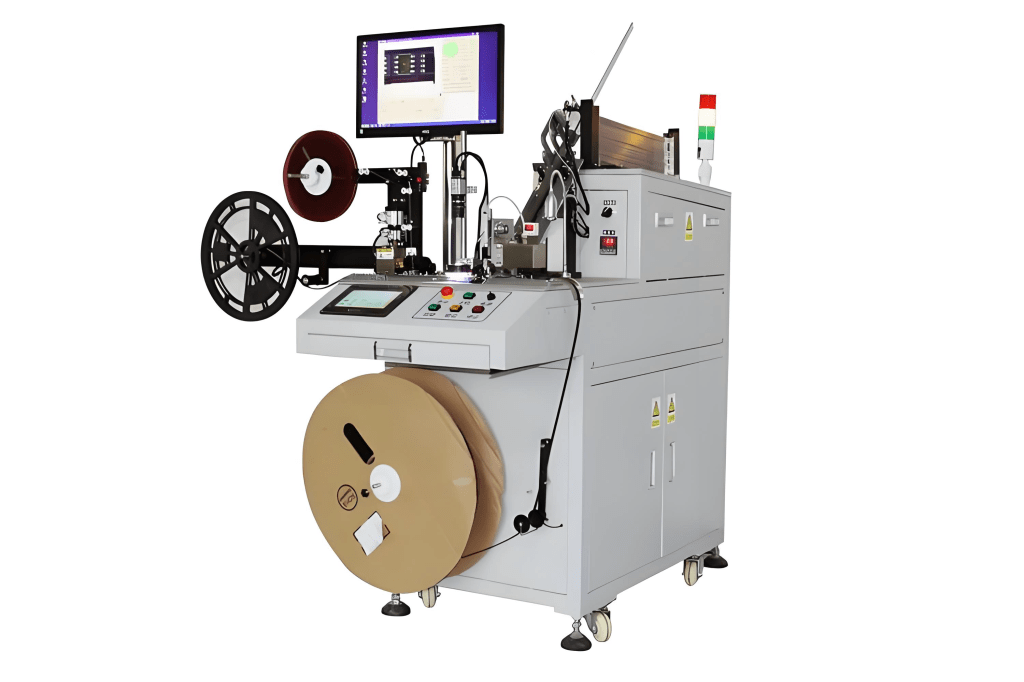


For small SMT factories, taping machines are a critical bottleneck: unexpected downtime disrupts feeder supply, slows pick-and-place lines, and increases labor costs. This article provides a **practical, step-by-step daily maintenance checklist**, essential weekly/monthly tasks, a quick troubleshooting guide, spare-parts recommendations, and metrics to track — all optimized for small operations seeking high uptime and low maintenance overhead.
Why Daily Maintenance Matters
Regular maintenance reduces unplanned stoppages, ensures consistent tape feed accuracy, prevents tape damage, reduces feeder errors and extends machine life. For small factories where every minute counts, a short daily routine prevents cascading production delays.
Daily Maintenance Checklist (Before Shift)
Estimated time: 10–20 minutes per machine. Follow this checklist at the start of each shift.
A. Safety & Pre-power Checks
- Verify E-stop and all safety interlocks function correctly.
- Ensure machine guards are secured and protective covers closed.
- Confirm emergency stop logs and warning lights are clear.
B. Visual Inspection
- Inspect feed path for debris, dust, adhesive residue, or metal shavings.
- Check carrier tape for dents, curl, wrinkles, or damaged sprocket holes.
- Inspect sprockets, guide rails, rollers and tape sensors for wear or contaminants.
C. Mechanical Checks
- Verify belt tension and look for visible cracks on drive belts.
- Check sprocket teeth for wear and ensure correct engagement with tape holes.
- Confirm smooth rotation of rollers and absence of abnormal noises during manual jog.
D. Electrical & Sensors
- Confirm all connectors and cable harnesses are secure (no loose connectors).
- Check sensor alignment (presence/absence sensors, optical sensors) and clean lenses with lint-free cloth.
- Review control panel for active alarms; clear and document any persistent alarms.
E. Cleaning & Consumables
- Wipe tracks, guides, and sealing heads with isopropyl alcohol; remove adhesive residue carefully.
- Replace or clean squeegees and sealing surfaces where adhesive buildup occurs.
- Refill consumables: sealing tape, hot-melt glue, or any specific adhesives as per machine manual.
F. Functional Checks
- Run a short calibration routine or index test (5–10 cycles) to verify pitch accuracy and indexing repeatability.
- Perform a sample feed with one reel of production tape and confirm orientation sensors and vision checks pass.
- Log cycle times and compare with baseline metrics — any >10% deviation should be investigated.
Weekly & Monthly Tasks (Recommended)
Weekly (approx. 30–60 minutes)
- Inspect and clean drive belts and pulleys; apply recommended lubrication to bearings (manufacturer spec).
- Check pneumatic lines and fittings for leaks; ensure air dryer/regulator is within spec.
- Clean and test vision camera sensors; update AI/vision database if new part variants were added.
- Back up machine recipes and configuration to central server or USB.
Monthly (approx. 1–2 hours)
- Complete full mechanical inspection: replace worn sprockets, belts, and seals as needed.
- Perform extended endurance run (1–2 hours) at production speed to detect intermittent faults.
- Verify absolute encoder calibration and motor parameter drift.
- Review spare-parts consumption and reorder low-stock items to maintain minimum safety stock.
Tools & Consumables Checklist
Minimal tool kit for daily operators:
- Lint-free wipes, 99% isopropyl alcohol
- Small torque screwdriver set, Allen keys, pliers
- Replacement belts, sprockets, and sensor lenses
- Vacuum pump for cleaning tracks
- Tape tension gauge, calipers, and a small flashlight
Recommended Spare Parts to Stock
Keep these critical spares on-site to minimize MTTR (Mean Time To Repair):
- Drive belts (2–4 units per machine)
- Sprockets and guide rails (1–2 sets)
- Common sensors (optical / proximity) — 2 units each
- Sealing heads, squeegees, and consumable adhesives
- Control fuses, encoder modules, and a basic electronics kit
Sample SOP (Operator-Friendly) — Paste into Daily Log
Suggested short SOP for operator clipboard or tablet:
- Power ON — confirm E-stop released and main air pressure ok.
- Visual check — feed path & tape condition — sign off.
- Clean feed track and sensor windows (2 wipes, IPA) — sign off.
- Run 5-cycle index test using standard reel — record cycle times & pass/fail.
- If test PASS → start production. If FAIL → follow troubleshooting flowchart and escalate if unresolved in 15 min.
Quick Troubleshooting Guide (Common Symptoms)
Symptom: Tape Jamming or Wrinkling
Causes: Incorrect tape tension, damaged sprocket, debris in feed path. Fixes: Clean track, replace damaged tape, verify sprocket engagement and tape alignment, adjust tension settings.Symptom: Sensor No-Read / False Triggers
Causes: Dirty sensor lens, misalignment, or faulty wiring. Fixes: Clean lens, re-align sensor, swap with spare sensor to isolate fault, check wiring harness and connector seating.Symptom: Indexing Inaccuracy / Pitch Errors
Causes: Worn sprockets, encoder drift, belt slip. Fixes: Replace worn sprockets, check encoder cable and connectors, check belt tension and pulley condition.
Key Metrics to Track (KPI)
- Uptime (%) — target ≥ 98% for critical lines
- Mean Time To Repair (MTTR)
- Mean Time Between Failures (MTBF)
- Reject Rate after taping (ppm)
- Changeover time (minutes) — target as agreed in OEE plan
Operator Training & Handover
Provide short practical training (30–60 min) focused on daily checks, basic troubleshooting, and escalation steps. Keep a laminated one-page SOP at the machine and ensure at least two trained operators per shift.
Related internal pages (auto-link placeholders)
The system will try to replace the placeholders below with live links from your site (smtpacklab.business.blog):
Conclusion — Small Steps, Big Uptime Gains
For small SMT factories, consistent short daily maintenance beats infrequent major overhauls. Implement the checklist above, keep critical spares on hand, train operators, and track simple KPIs — you will reduce downtime, improve throughput and lower total cost of ownership for taping equipment.
FAQ
How long should daily maintenance take?
About 10–20 minutes per machine for basic checks; weekly/monthly tasks add additional time.
What consumables wear fastest?
Sprockets, belts, sealing heads and adhesive tape/film tend to wear fastest and should be monitored closely.
Author: SMT PACK LAB · smtpacklab.business.blog


 SMTPack LAB
留下评论