
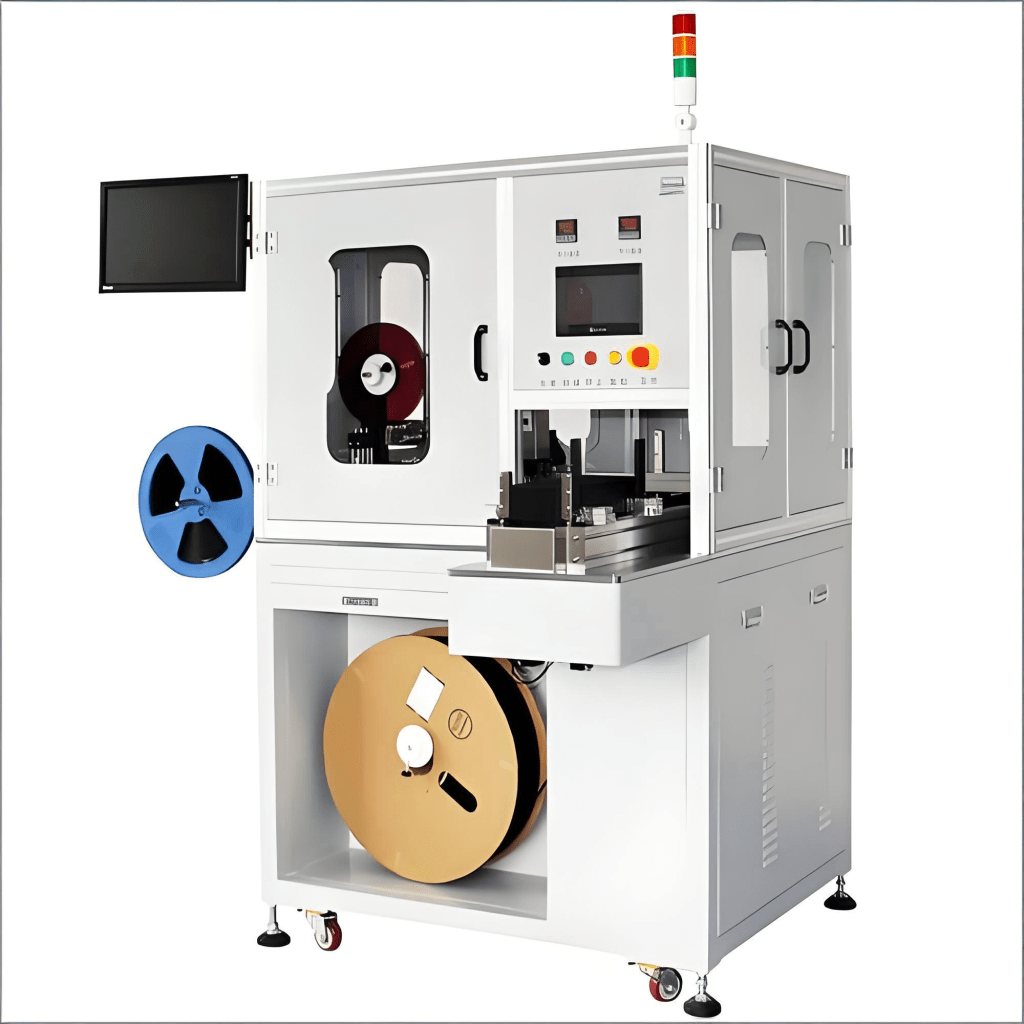


Case Study: Improving SMT Efficiency with Automation Solutions
Published November 1, 2025 • SMT PACK LAB
This case study shows how a mid-sized EMS factory improved SMT line throughput by 45%, reduced rework by 62%, and lowered cost-per-part by 18% after implementing targeted automation: taping/tray automation upgrades, inline vision inspection, and MES-driven traceability.
1. Executive Summary
Customer: EMS Provider (small/medium) • Problem: manual packaging, high inspection workload, frequent feeder jams. Solution: semi-automatic taping + automated tray packing, AI-assisted vision checks at taping/tray stations, MES integration for traceability. Outcome: throughput ↑45%, rework ↓62%, validated ROI within 10 months.
2. Background & Baseline Metrics
Baseline (pre-automation): 2 SMT lines, average throughput 1,200 CPH, rework rate 4.8%, manual taping/tray operations and spot QA inspections.
3. Project Objectives
- Increase overall line throughput by at least 30%.
- Reduce rework and scrap by 50% through early defect detection.
- Achieve payback within 12 months.
- Improve inventory traceability for taped reels and trays.
4. Automation Solutions Implemented
4.1 Taping & Tray Automation
Replaced manual taping with semi-automatic taping machines and added automatic tray packers on the secondary line to handle bulky parts. These devices reduced packaging errors and standardized reel/tray outputs for feeders. See our taping & tray guide for equipment selection and maintenance.
Taping Machines & Tray Packers — FAQ & Guide. :contentReference[oaicite:0]{index=0}
4.2 Inline Vision Inspection (AOI + AI)
Deployed AOI at post-placement and an AI-based anomaly detector at the taping/tray station to catch mis-oriented parts, missing parts, and damaged leads before they entered inventory. This prevented bad reels/trays from being fed into pick-and-place machines and cut downstream rework.
How to Optimize Taping Efficiency in Low-Volume PCB Production. :contentReference[oaicite:1]{index=1}
4.3 MES Integration & Traceability
Integrated taping/tray machines with MES to log reel/tray IDs, lot numbers, and inspection images — enabling rapid root-cause and quarantine of suspect inventory. Traceability lowered recall scope when a supplier deviation occurred.
SMT Line Setup Guide (Tag). :contentReference[oaicite:2]{index=2}
5. Implementation Steps & Timeline
- Week 0–2: Requirements gathering, KPI baseline measurement.
- Week 3–6: Procure semi-auto taping machines & tray packer; setup vision fixtures.
- Week 7–10: Pilot on single line; iterate AI model with real defect samples.
- Week 11–16: Rollout to second line + MES integration and operator training.
6. Results & Metrics (Post-implementation)
| Metric | Before | After | Change |
|---|---|---|---|
| Throughput (CPH) | 1,200 | 1,740 | +45% |
| Rework Rate | 4.8% | 1.8% | -62% |
| Labor hours/day on packaging | 6 | 2 | -67% |
| Cost-per-part | Base | Base × 0.82 | -18% |
7. Key Lessons Learned
Operational takeaways (click to expand)
- Pilot first: validate vision models and feeder workflows on a pilot line before scaling.
- Data matters: collect diverse defect samples for AI training to reduce false positives.
- Operator buy-in: involve shop-floor staff and train them on new workflows — it reduces resistance and errors.
- Maintenance plan: schedule preventive checks for taping/tray machines to avoid throughput regression. See our maintenance best practices. :contentReference[oaicite:3]{index=3}
8. Common Pitfalls & How We Avoided Them
- Ignoring feeder compatibility → we pre-checked feeder acceptance with vendor demos (reduced integration rework).
- Poorly labeled reels/trays → added barcode printing at packaging to ensure traceability.
- Underestimating tooling lead-time → ordered cavity tooling early and used temporary fixtures during pilot.
9. Vendor Selection Checklist
- On-site demo with your parts and pick-and-place. (Ask for live feed.)
- Spare parts & local support availability.
- MES/API integration capability & standard data export.
- Clear SLAs for uptime & MTTR.
10. Further Reading & Internal Resources
- How to Choose the Right Taping Machine for Your SMT Line. :contentReference[oaicite:4]{index=4}
- Taping Machines & Tray Packers — FAQ & Guide. :contentReference[oaicite:5]{index=5}
- SMT Automation Maintenance Best Practices (Tag). :contentReference[oaicite:6]{index=6}
- Tray Packing (Tag). :contentReference[oaicite:7]{index=7}
- SMT Line Setup Guide (Tag). :contentReference[oaicite:8]{index=8}
11. Conclusion
Targeted automation — focusing on packaging standardization, inline vision, and digital traceability — delivered measurable throughput and quality gains. For EMS providers, small pilots that validate vision models and feeder compatibility are the fastest path to low-risk, high-impact improvements. Want help running a pilot on your SMT line? Contact us
© SMT PACK LAB • For assistance with taping/tray automation, vision integration, or MES connectivity, contact us.


 SMTPack LAB
留下评论